
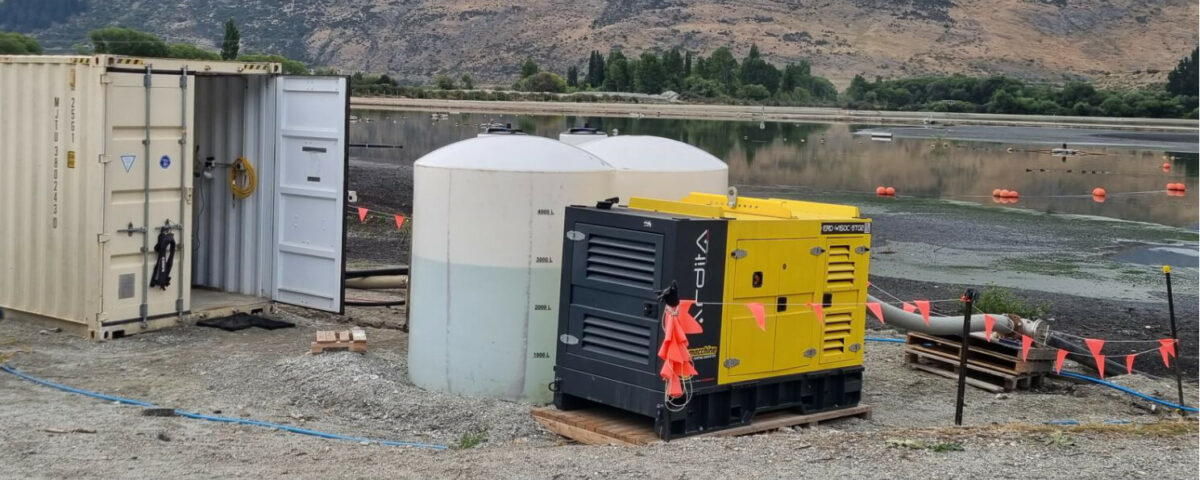
At Council sewage ponds in New Zealand’s South Island, a desludging project was undertaken to clean and restore sewage sedimentation ponds.
The main goal of the project was to maintain a high and consistent flow rate from the dredge to the dewatering bags, while also allowing the safe passage of debris typically present in sewage slurry: including heavy faecal organics with 2% to 4% sand, silt, and fragments of sanitary items. Another crucial aspect was the health risk posed by sewage slurry, which can contain toxic contaminants, harmful bacteria, and potentially dangerous “forever chemicals.” To address environmental concerns, the pump set also had to operate within the strict noise limits set by local regulations, ensuring full compliance throughout the operation.

To enhance overall project efficiency and ensure timely completion, the Ardita D150ST was carefully studied and selected for the Council sewage ponds project.
The system was designed to handle a minimum flow rate of 120 m³/h, with a low static head but a long discharge line connecting the large pond to the dewatering area. The Cornell 6STX pump is capable of handling heavily solids-laden liquids such as this sewage slurry, providing the robust and reliable performance required. The contractor, Southwater, deployed the Ardita D150ST as a booster unit between their auger suction dredge and geotextile dewatering bags. The project spanned 8 months of active dredging, covering both summer and winter seasons. Southwater was highly impressed with the performance and ease of maintenance of the Ardita D150ST, while the end customer appreciated the efficiency and reliability of the pump set. The client’s trained operator was able to run the system safely, avoiding any health hazards associated with maintenance. At the conclusion of the project, the pump was re-deployed on a dry hire basis for additional transfer operations between ponds.


